The Proof in the Leaf: How Authentication Is Reshaping America's Rare Tea Market
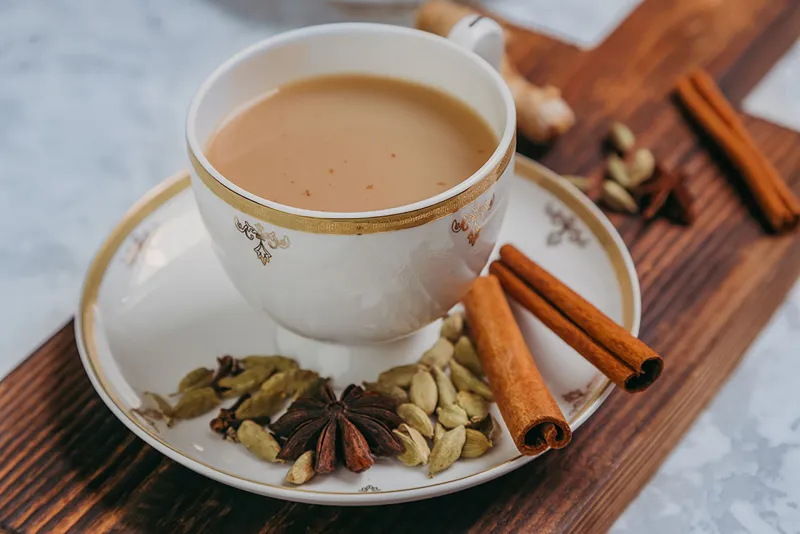
Photo: tea leaves authentication laboratory inspection close up, via recipes.net
For most of the past decade, America's market for rare tea ran on a handshake. A trusted dealer, a familiar estate contact, a conversation conducted over a gaiwan — that was the infrastructure. It worked because the sums involved were modest and the circle was small.
That circle has widened, and the sums have not stayed modest. With well-documented lots now clearing at prices that would have struck observers as implausible a decade ago, the informal trust that once carried the trade is being asked to bear weight it was never designed to hold. Where money moves at this scale, misrepresentation follows. Not always dramatically, and rarely with outright forgery. More often with a quiet, profitable substitution.
The Anatomy of a False Claim
Fraud in the rare leaf market seldom announces itself. It arrives as a plausible adjustment: a later spring pick sold as a pre-Qingming harvest; a Fujian cultivar presented as a single-estate Taiwanese lot; an aged cake whose wrapper tells a considerably better story than its contents; an elevation claim that shaves several hundred meters off reality. Each of these shifts the price without dramatically shifting the cup — which is precisely what makes them difficult to catch and lucrative to attempt.
The sensory margin can be narrow. The financial margin is not.
Inside the Authentication Laboratory
A small number of specialty laboratories in the United States and Europe now accept tea submissions, and their methods will be familiar to anyone who has followed the wine and spirits trade. Gas chromatography and mass spectrometry map volatile compounds, offering a fingerprint that can flag the presence of added flavoring or an unexpected processing step. Stable isotope analysis can speak to geography and, in some cases, to the water and soil conditions under which a leaf was grown. DNA barcoding increasingly plays a role in cultivar identification, allowing a lab to distinguish, for instance, a genuine Da Hong Pao lineage from a companionable lookalike.
What these tools cannot do is deliver a verdict on their own. Isotope data narrows a range; it does not name an estate. DNA confirms a cultivar; it says nothing about the harvest date printed on the tin. Reputable labs are candid about this, and the collectors who get the most from them are the ones who treat results as evidence rather than absolution.
Sensory panels remain the backstop — trained tasters who can detect the chemical signature of storage faults, re-firing, or blending. Their judgments are subjective, but subjectivity informed by twenty years of reference samples is a form of data in its own right.
The Ledger Goes Digital
Alongside the laboratory, a parallel effort is underway in documentation. A number of estates and brokers have begun attaching tamper-evident seals and digital lot passports to high-value consignments, with records anchored to a distributed ledger so that a harvest date, once entered, cannot be quietly revised.
The technology is less impressive than its advocates suggest, and more useful than its skeptics allow. A ledger proves that a record has not been altered. It does not prove that the record was accurate when it was created. A falsified entry, immutably preserved, is still a falsified entry. What the ledger genuinely accomplishes is narrower and more important: it makes the chain of custody visible, and visibility discourages the casual misstatement that accounts for most of the problem.
The Work That Still Requires a Passport and a Pair of Boots
The most effective authentication in the American market today is unglamorous. It is a buyer who has walked the rows of a garden. It is a broker who has cupped the same estate across fifteen consecutive seasons and can say, with confidence, that a sample does not taste like the mountain it claims to come from.
Several serious collectors now maintain reference archives — sealed, dated samples retained specifically so that future purchases can be compared against a known baseline. This is old-fashioned work, closer to provenance research in the art world than to laboratory science, and it remains the single most reliable check on a claim that does not hold up.
What to Demand Before the Check Is Written
For collectors operating at five figures and above, the standard is no longer difficult to articulate:
- A named lot, not a category. Ask for the specific garden, the pick date, and the processing method.
- Documented chain of custody, from estate to exporter to importer to you.
- Laboratory reports where the claim justifies the cost, with a clear statement of what the test does and does not establish.
- A tasting sample drawn from the same lot as the purchase, not from a presentation set.
- Escrow or conditional terms that permit rejection if the delivered leaf diverges from the sample.
None of this is unreasonable, and dealers who trade seriously already expect the questions.
The Trust Premium
The rare tea trade will not be regulated into integrity, and the American market is unlikely to acquire the sort of formal appellation system that underpins fine wine. What it is acquiring instead is a culture of verification — uneven, expensive, and imperfect, but real.
The collectors who fare best are those who understand that authentication is not a product they can purchase once but a habit they maintain. In a market where a single tin can carry the price of a used automobile, diligence is the least exotic and most valuable instrument in the room.