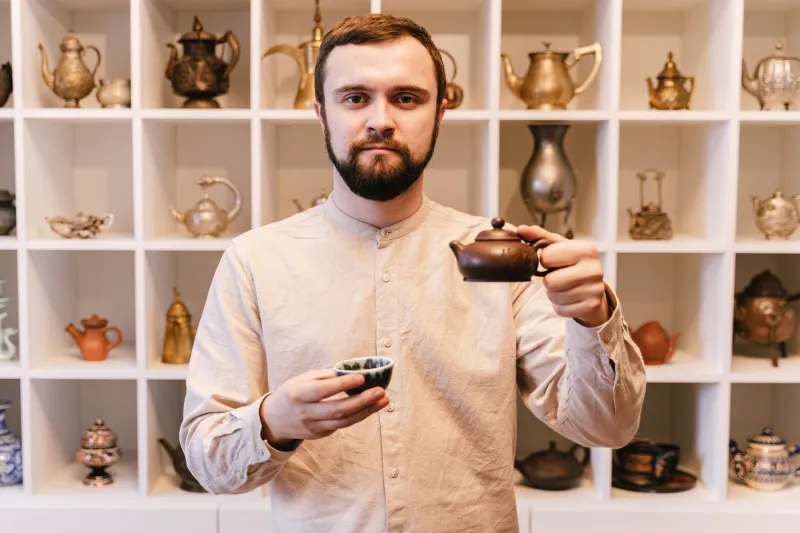
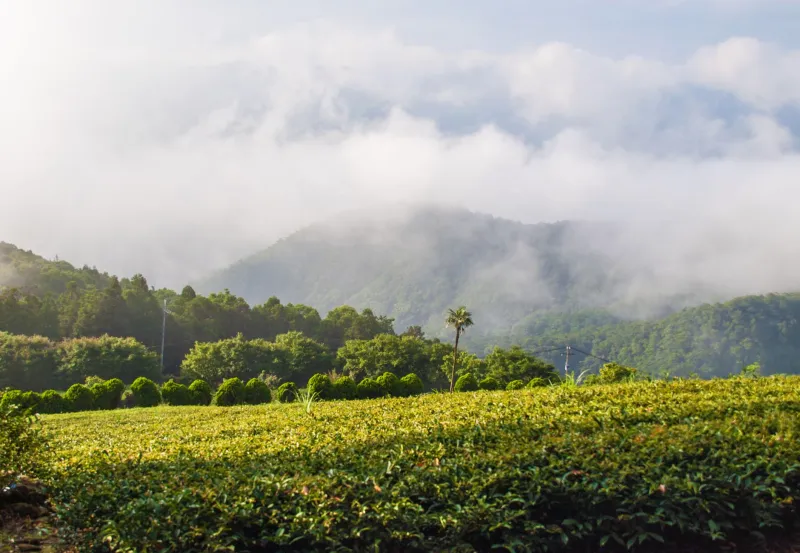
Time in the Leaf: The Vertical Tasting Method Transforming How Collectors Understand Tea
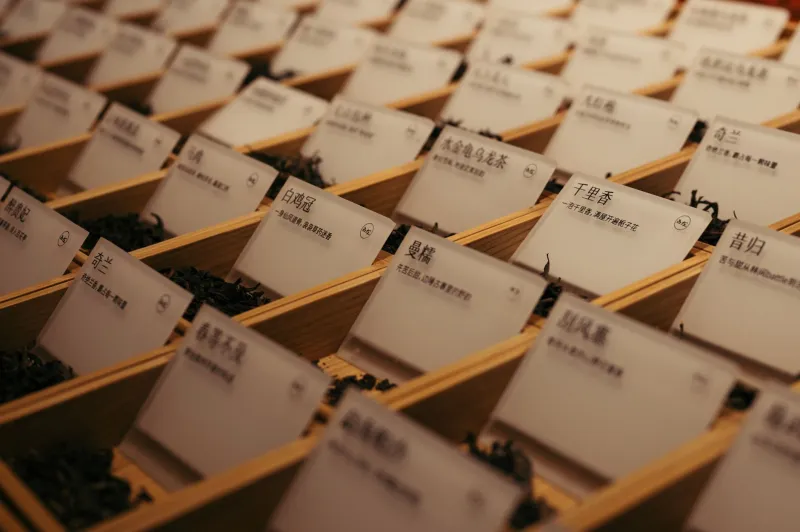
Borrowed from the discipline of fine wine evaluation, vertical tasting — the practice of comparing the same estate or cultivar across successive harvests or aging periods — has quietly become one of the most rigorous methodologies in the world of premium tea collecting. For master blenders and serious acquisitors alike, the vertical flight is not merely an exercise in pleasure; it is an instrument of precision, capable of revealing truths about terroir, climate, and craft that no single cup, however exquisite, could ever disclose alone.
The Logic of the Flight
In the world of fine wine, a vertical tasting presents the same château or domaine across multiple years, allowing the taster to isolate the variable of time while holding producer and place constant. The methodology illuminates how a single growing season — its rainfall patterns, its temperature swings, its unexpected frosts or unusual warmth — imprints itself upon the finished product. The implications for tea are, if anything, even more pronounced.
Tea is harvested multiple times annually. A single estate in Darjeeling may produce a first flush in March, a second flush in May, and an autumnal harvest in October, each reflecting an entirely different climatic and biological moment. Across years, those differences compound. The collector who assembles tins from the same garden across a decade possesses not merely a collection of teas but a longitudinal record of a place — a kind of botanical archive that speaks to soil health, weather patterns, and the evolving decisions of a master producer.
"When I sit down with a vertical flight of Qimen from the same cooperative across eight harvests," explains one Boston-based collector who has spent fifteen years building what he describes as a working reference library of Chinese and Indian teas, "I am not simply tasting tea. I am reading a document. Each year tells me something about the previous one, and about what the estate is capable of becoming."
What the Vertical Reveals
Practitioners of tea vertical tasting describe a layered experience that unfolds differently from the evaluation of a single cup. The first cup in a flight — often the oldest, in the case of aged teas — establishes a baseline of expectation. Subsequent cups either confirm or complicate that expectation, and it is in the moments of complication that the most instructive information emerges.
A master blender at a premium tea house with sourcing operations in both Taiwan and Sri Lanka describes the process with characteristic precision. "We conduct vertical tastings of our high-mountain oolongs from Li Shan every year before making acquisition decisions. What we are looking for is not simply quality in isolation — we are looking for trajectory. A tea that has improved across three consecutive harvests tells us something about the estate's direction. A tea that has plateaued, or declined in a particular dimension, tells us something else entirely."
The dimensions under scrutiny in a serious vertical flight extend well beyond the basic vocabulary of sweetness, bitterness, and astringency. Experienced palates track the evolution of specific aromatic compounds — the orchid notes in a fine Taiwanese oolong, the muscatel character of a second-flush Darjeeling, the camphor undertones that develop in properly stored aged pu-erh. These compounds do not remain static. They shift with climate, with processing technique, with the age of the trees themselves, and with the accumulated wisdom — or occasional misstep — of the human hands involved at every stage.
Climate as Collaborator
Perhaps the most consequential insight that vertical tasting has delivered to the contemporary collector is a heightened sensitivity to climate as an active co-creator of flavor. As growing regions across Asia and the Indian subcontinent experience increasingly irregular monsoon patterns, altered frost dates, and shifting temperature averages, the fingerprint of climate change is becoming legible in the cup for those trained to read it.
"Three years ago, I conducted a vertical of first-flush Darjeelings from a single garden spanning 2014 to 2023," recounts a Chicago-based collector and tea educator. "The shift in the 2019 and 2020 harvests was unmistakable — a reduction in the characteristic brightness, a slight flattening of the muscatel note. The estate confirmed that those years had seen unusual heat during the critical growth window. That information is now part of how I evaluate future offerings from that garden."
For collectors making significant financial commitments — premium teas from storied estates can command prices that rival those of fine Burgundy — this kind of longitudinal intelligence is not a luxury. It is due diligence.
Building a Vertical Practice
For those seeking to develop a vertical tasting practice, the methodology demands both patience and foresight. Unlike wine, where back vintages can often be sourced from secondary markets, tea requires the collector to have been present — or to have established relationships with those who were. This is one reason that direct relationships with producers, importers, and specialist dealers have become increasingly central to serious tea collecting in the United States.
The practical architecture of a vertical tasting session reflects the same care applied to its vinous counterpart. Vessels are standardized — typically gaiwan or glass brewing vessels — to eliminate variables introduced by different materials. Water temperature, leaf weight, and steeping duration are held constant across each cup in the flight. Palate-cleansing intervals are observed. Notes are recorded with the same granularity a sommelier would bring to a cellar evaluation.
"The goal," as one master blender summarizes it, "is to remove every variable except time. When you do that, time becomes the most eloquent speaker in the room."
The Collector's Competitive Edge
In a market where the finest teas are produced in quantities that make exclusivity structural rather than merely aspirational, the ability to evaluate tea vertically confers a genuine advantage. Those who can trace the arc of an estate's development — who understand not only where a tea is but where it has been and where it appears to be going — are positioned to make acquisition decisions with a confidence that transcends preference.
This is, ultimately, what distinguishes the connoisseur from the enthusiast. Not the ability to identify a fine cup in isolation, but the capacity to understand that cup as a moment in a longer story — one written in soil, season, and the slow, irreversible passage of time.