Behind Closed Doors: How the World's Most Coveted Teas Change Hands in Secret
In the spring of 2022, a single kilogram of aged Da Hong Pao—sourced from a cliff-grown mother bush in Fujian Province estimated to be more than three centuries old—transferred ownership without a single public bid. No auction catalog was printed. No lot number was assigned. The transaction was completed over the course of several private meetings between a Taiwanese estate broker and a collector based in Greenwich, Connecticut, with authentication conducted by a specialist consultant flown in from Hong Kong at the buyer's expense. The final price has never been disclosed.
This is not an anomaly. It is, increasingly, the standard.
For collectors operating at the highest levels of the rare tea market, the public auction—with its competitive energy and transparent pricing—represents only a fraction of how significant acquisitions are made. The more consequential transactions happen elsewhere, in a world governed by relationships, reputation, and carefully guarded access.
The Architecture of Exclusivity
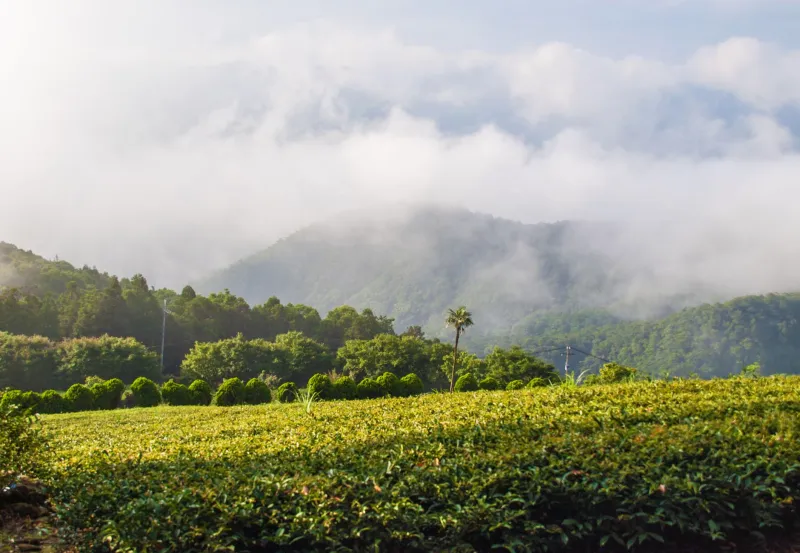
The private tea market functions through a layered system of trust. At its foundation are the estates themselves—the high-altitude gardens of Yunnan, the fog-shrouded hillsides of Darjeeling, the ancient arbor forests of Myanmar—whose proprietors often maintain direct relationships with a small number of preferred buyers. These relationships are cultivated over years, sometimes decades, and they confer privileges that no public market can replicate: early access to single-harvest lots, the opportunity to commission bespoke processing methods, and occasionally the right of first refusal on aged inventory that never reaches open sale.
Between the estate and the collector sits a class of brokers and intermediaries whose identities are rarely publicized. These individuals—operating variously out of Taipei, Tokyo, London, and increasingly New York and San Francisco—function as the connective tissue of the private market. They maintain relationships on both sides of the transaction, curate viewings for vetted buyers, and negotiate terms that account not merely for price but for provenance documentation, storage continuity, and the precise conditions under which a collection may eventually be resold.
"The estate wants to know where the tea is going," explains one New York-based tea acquisition consultant who works exclusively with collectors holding portfolios valued above two million dollars. "They care about storage conditions. They care about whether the buyer understands what they are acquiring. A prestigious placement matters to a grower in ways that pure price does not."
Pre-Sale Access and the Viewing Protocol
For those rare occasions when exceptional teas do enter a more formalized sale process—typically organized through specialist brokers rather than traditional auction houses—the protocol bears little resemblance to a conventional lot viewing. Invited collectors may receive a sealed sample parcel weeks before the sale date, accompanied by documentation prepared by the estate or its authorized agent. A formal tasting, conducted under controlled conditions and often facilitated by a certified tea sommelier, precedes any negotiation.
Authentication is not assumed; it is verified. Specialist consultants with backgrounds in agricultural science, traditional processing methods, and regional terroir analysis are retained to examine both the leaf and the liquor. In several documented cases, collectors have commissioned laboratory analysis of trace mineral profiles to confirm geographic origin—a practice borrowed, in part, from the fine wine world's growing reliance on isotopic fingerprinting.
The viewing itself is characteristically understated. There are no spotlights, no auctioneers, no competitive theater. Collectors examine samples in silence or in quiet conversation with their advisors. Offers, when they come, are submitted in writing.
The Role of the Specialist Consultant
As the private tea market has matured, a new professional class has emerged to serve collectors navigating its complexities. Tea acquisition consultants—distinct from the traditional merchants and retailers who populate the public-facing industry—offer services that range from portfolio assessment and provenance research to storage facility design and insurance valuation.
Several of the most sought-after consultants in the United States have backgrounds that span multiple luxury categories: fine wine, rare whisky, contemporary art. The crossover is deliberate. The methodologies developed to authenticate a Burgundy or value a Basquiat translate with surprising fidelity to the rare tea context, where documentation gaps, storage history, and market comparables present analogous challenges.
"A collector who has built a serious wine cellar already understands the vocabulary," notes one consultant who recently relocated her practice from London to Miami to serve a growing American client base. "What they need is someone who can translate that expertise into the specific protocols of the tea world—because the authentication standards here are still developing, and the asymmetry of information is significant."
That asymmetry, it should be noted, favors those with established relationships and knowledgeable advisors. Collectors entering the private market without guidance risk overpaying for inadequately documented material or, in some cases, acquiring product whose provenance claims cannot be substantiated.
Gaining Entry
For those aspiring to participate in this market, the pathway is neither quick nor transactional. Brokers and estate representatives consistently emphasize that access is earned through demonstrated seriousness rather than purchased through wealth alone. Attending public tastings, developing relationships with reputable specialty retailers, and engaging substantively with the academic and cultural dimensions of tea collecting are the recognized preliminaries.
Several American collectors who now operate comfortably within private sale networks describe an apprenticeship period of three to five years during which they built credibility through smaller public acquisitions, cultivated relationships with importers, and established a reputation as informed and respectful participants in the broader collector community.
The gatekeepers, ultimately, are not institutions but individuals—and they are watching long before any introduction is made.
The Question of Value
One dimension of the private market that distinguishes it sharply from its public counterpart is the complexity of price discovery. Without the comparative data generated by public bidding, establishing fair value for a privately offered tea requires genuine expertise. Prices are influenced by harvest year, processing method, storage provenance, remaining quantity, and the identity and reputation of the selling party—variables that interact in ways that resist simple formula.
For serious collectors, this opacity is not a deterrent. It is, rather, part of what makes the private market compelling: the conviction that the most significant acquisitions cannot be reduced to a number on a public ledger, and that the relationships sustaining this world are, in their own way, as valuable as the teas themselves.