Keys, Lockers, and the Hundred-Dollar Cup: A Field Guide to America's Private Tea Clubs

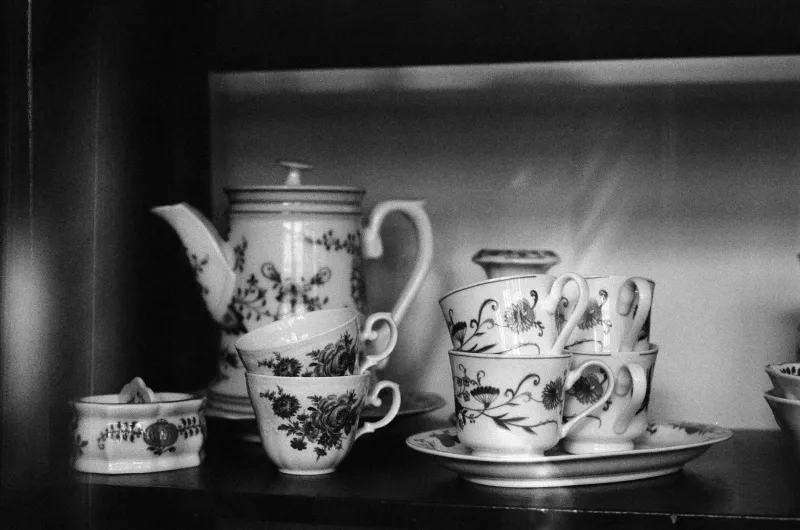
Photo: private members tea salon interior with long wooden counter, single row of porcelain cups and low warm lighting, via i.pinimg.com
The address is unmarked. Guests are met in a lobby, escorted to a room with eight seats, and asked to leave their phones in a wooden tray by the door. The tea is served in three infusions, the last of which is not on any menu because the menu does not exist. Membership requires a nomination, a conversation with the founder, and an initiation fee that would comfortably cover a year of fine dining. This is not a restaurant with a private room. It is a club, and it is one of a growing number in the United States built entirely around tea.
Why Tea Fits the Private Club Form
Private clubs sell three things: access, discretion, and company. Tea supplies all three more naturally than most luxury categories. The product is scarce, the ritual is inherently intimate, and the setting rewards stillness rather than spectacle. Where a private dining room hosts a table, a tea salon hosts a conversation. Members describe the appeal in almost identical terms: a room where no one is performing.
Seven Models Now Visible Across the Country
1. The nomination-only salon
The strictest form, typically capped at a few hundred members, with a nomination and interview process. Initiation fees in the low five figures are common, annual dues often sit between $2,000 and $6,000, and the programming is deliberately small: two or three tastings a month, each capped at eight or ten seats. Founders describe the membership cap as a quality control rather than a marketing device.
2. The retailer's back room
The most accessible entry point. A high-end tea merchant converts storage or a mezzanine into a members' tasting room, then ties access to purchase history. A cup from the reserve shelf might run $60 to $120; membership may cost nothing beyond a demonstrated buying relationship. These programs function as loyalty architecture, and they are expanding fastest.
3. The collectors' cooperative
Less a venue than a shared liability. Members pool resources for storage, insurance, and procurement, maintaining a climate-controlled cellar and meeting quarterly to taste through the inventory. Dues skew modest; the real commitment is the shared purchase obligation. These groups have proliferated as individual collectors confront the practical limits of home storage.
4. The social club with a tea wing
Established city and country clubs have begun adding tea service to their beverage programs, often hiring a dedicated specialist and building a small reserve list for members. The tea is rarely the reason someone joins, but it has become a differentiator in a competitive membership market, particularly in older institutions seeking younger members.
5. The hotel residency
A handful of luxury hotels now operate invitation-only tea programs for guests and local members, pairing a resident specialist with a small reserve cellar. Access is by reservation and, increasingly, by relationship. The cup price is high; the门槛 is the introduction.
6. The atelier model
A specialist's private studio, usually residential in scale, where a single host serves a fixed menu to six or eight guests at a set price. These are not clubs in the corporate sense, but they operate on membership logic: regulars receive first refusal on dates and first access to new acquisitions.
7. The invitation-only reserve list
The least visible model and the one collectors prize most. There is no room and no dues. There is a list, held by a merchant or a small group of collectors, that determines who is offered a given lot before it is announced. Membership is conferred rather than purchased, and it is frequently the most valuable form of access in the American market.
What the Dues Actually Buy
Members interviewed for this survey consistently name the same benefits, and almost none of them are liquid. The first is reserve access: the ability to buy a tea that will never be listed publicly. The second is calibration, the chance to taste alongside people whose palates are more developed than one's own. The third is discretion, both social and physical, including lockers, private entrances, and no-photography rules that have become a signature of the highest tier.
The physical design tends to follow a recognizable script: warm woods, low light, a single long counter rather than individual tables, and storage visible but not ostentatious. Several clubs have invested heavily in temperature and humidity control, treating the cellar as a members' asset rather than a back-of-house necessity.
The Discretion Clause
Nearly every club surveyed restricts photography and social posting. The rationale is partly commercial, protecting access from becoming content, and partly social. Members who pay for privacy do not wish to appear in someone else's feed. For a category that has spent a decade building public credibility through transparency and education, the shift toward discretion is notable. It suggests that the next phase of American luxury tea will be defined less by what is documented than by what is quietly poured.
How to Read a Club Before Joining
Ask what portion of the cellar is committed to member access versus retail sale. Ask how allocations are decided and whether the criteria are written down. Ask how many members were admitted in the past year and how many departed. Ask who selects the teas and what their credentials are. Ask, plainly, what happens if the founder loses interest. The answers will distinguish a genuine institution from a well-decorated waiting room.
The Cup as a Membership Card
The private tea club is not yet an American institution in the way the private dining club is. But the direction of travel is clear. As collections grow, as allocations tighten, and as the most sought-after teas become impossible to purchase at any price, the room in which one drinks them becomes the asset. The hundred-dollar cup is not expensive because of the leaf. It is expensive because of who else is holding one.