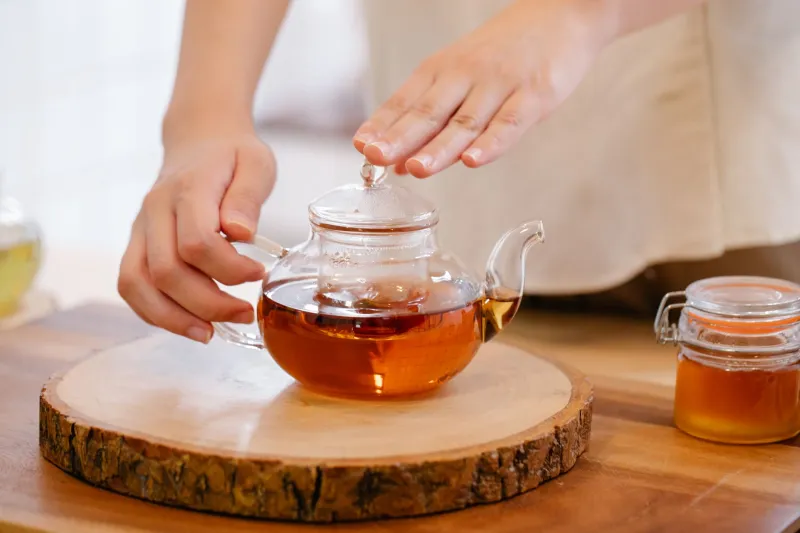
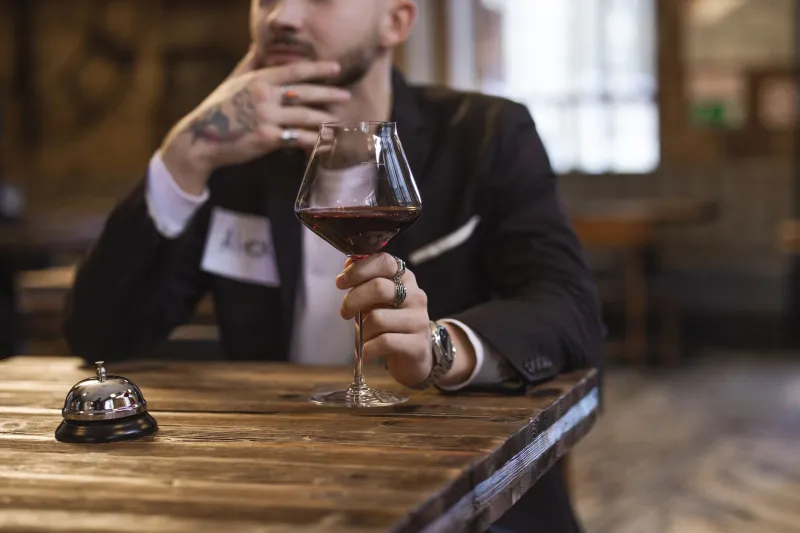
A Different Inheritance: How the Next Generation of Affluent Americans Is Redefining the Collector's Cellar
Somewhere in a temperature-controlled storage facility outside of Scottsdale, Arizona, a collection of first-growth Bordeaux sits largely untouched. Its owner, a retired private equity executive, assembled it over three decades with the same disciplined conviction he brought to his portfolio—buying on vintage, consulting the established critics, storing with meticulous care. It is, by any conventional measure, an extraordinary cellar. His daughter, who recently assumed stewardship of the family's broader estate, has visited it twice.
She is more interested in the forty-year-aged Pu-erh cakes she has been quietly acquiring through a specialist importer in Los Angeles.
This dynamic—repeated with variations across the households of American affluence—represents something more than a shift in personal taste. It reflects a broader recalibration of what luxury collecting means to a generation that has inherited significant wealth alongside a set of values and aesthetic sensibilities that differ, in important respects, from those of their parents.
The Weight of the Wine Cellar
For much of the twentieth century, the serious wine collection functioned as a cornerstone of American upper-class identity. It signaled sophistication, patience, and access—the capacity to acquire rare bottles, store them properly, and understand their significance within a well-established hierarchy of producers, appellations, and vintages. The vocabulary was authoritative. The critics were canonical. The status signals were legible to a wide audience.
Younger affluent Americans—broadly those in their late twenties through early forties who have come of age in a culture defined by transparency, sustainability, and a studied skepticism of inherited status symbols—often describe the traditional wine cellar with a mixture of respect and mild alienation. They appreciate its rigor. They do not particularly wish to replicate it.
"My father's cellar is magnificent," says one 34-year-old heir to a manufacturing fortune who asked to be identified only by his first name, Marcus. "But it has always felt like his story, not mine. The producers he reveres, the critics he trusts, the whole framework—it was built by a generation that I admire but don't entirely share. Tea gave me a way to build something that belongs to me."
Why Tea, and Why Now
The appeal of rare tea collecting for this demographic is not arbitrary. Several characteristics of the category align with values and preferences that research and observation consistently identify as defining features of younger affluent consumer behavior.
First, there is the question of intellectual complexity. Serious tea collecting—particularly in the domains of aged Pu-erh, single-origin oolongs, and rare white teas—demands engagement with a body of knowledge that is genuinely demanding and, for most Americans, largely unmapped. The established critical hierarchies that structure wine collecting do not yet exist in tea with the same authority, which means that the serious collector must develop their own framework of understanding through direct experience, independent research, and cultivation of relationships with producers and experts. This is, paradoxically, part of the appeal: the absence of a definitive canon creates space for genuine intellectual discovery.
"In wine, there is always a Michelin star or a Parker score to fall back on," observes one New York-based collector in her late thirties who holds a background in art history and began building a tea collection after a research trip to Yunnan Province. "In tea, you have to do the work yourself. That is more interesting to me, and I think to a lot of people my age."
Second, there is sustainability—a consideration that carries genuine weight for this cohort rather than functioning merely as marketing language. Many rare tea estates, particularly those producing high-value material through traditional methods, operate in ways that are inherently sustainable: small-scale cultivation, minimal chemical intervention, harvesting practices calibrated to the long-term health of ancient trees. The environmental narrative of a 300-year-old arbor tea tree in Yunnan is meaningfully different from that of a large-scale Napa Valley operation optimized for commercial yield.
Third, and perhaps most significantly, there is the question of global perspective. Younger collectors are, as a group, more internationally oriented than their predecessors—more likely to have traveled extensively in Asia, more likely to have cultivated relationships across cultural boundaries, and more likely to find genuine resonance in aesthetic traditions that originate outside the Euro-American mainstream. Tea collecting, at its most serious, requires engagement with Chinese, Japanese, Taiwanese, and Indian cultural contexts in ways that wine collecting, despite its French and Italian dimensions, does not.
Investment Logic and the Long View
Beyond the cultural and intellectual dimensions, there is a straightforward financial argument that younger collectors are increasingly articulating with confidence. The rare tea market, while far smaller than the fine wine market in absolute terms, has demonstrated sustained appreciation in key categories over the past two decades. Aged Pu-erh, in particular, has attracted serious attention from collectors with backgrounds in alternative asset investment, who note that properly stored examples from reputable producers have appreciated at rates that compare favorably with mid-tier fine wine over comparable periods.
The market's relative youth also means that entry points remain accessible in ways that have largely closed in wine. A collector with genuine knowledge and established relationships can still acquire material that will prove, in retrospect, to have been significantly undervalued—a dynamic that the wine world's more mature pricing structures make increasingly difficult to replicate.
"We are at a moment in rare tea that resembles where fine wine was in the 1970s," argues one wealth manager in Boston who has begun advising clients on tea as part of broader alternative asset portfolios. "The infrastructure is developing. The authentication standards are being established. The collector base is growing. For those who enter now with serious intent, the opportunity is real."
Redefining the Heirloom
There is, finally, something worth noting about the emotional dimension of this generational shift. The wine cellar, for all its cultural prestige, has always been somewhat paradoxical as an heirloom: its contents are, by design, meant to be consumed. A collection of aged Pu-erh cakes, stored with the same care as a fine cellar but built with a different relationship to time and continuity, carries a different kind of meaning. It can be passed on. It can accumulate significance across generations. It can become, in the fullest sense, a family legacy.
For a generation that is acutely conscious of what it means to leave something of value—environmentally, culturally, financially—for those who come after, that distinction is not trivial. The cellar their parents built was magnificent. The collection they are building is theirs.