The Thinking Palate: What Neuroscience Is Revealing About the Minds of Master Tea Tasters
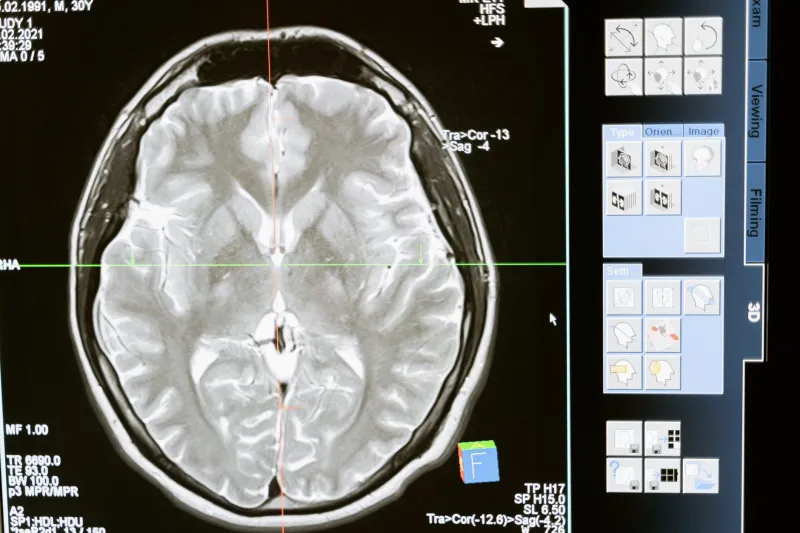
In a research laboratory at Johns Hopkins University, a neuroscientist asks a subject to close her eyes and hold a small porcelain cup beneath her nose. The liquid inside is a first-flush Darjeeling, harvested from a single garden at 6,500 feet of elevation and processed within hours of plucking. The subject—a collector with fifteen years of dedicated tasting experience—begins to narrate what she perceives: muscatel, apricot, a trace of green hay, something mineral and almost oceanic beneath it all. The brain scan running simultaneously lights up in ways that, to the researchers watching, are beginning to look remarkably familiar.
The pattern resembles what they have observed in trained musicians processing harmonic structure. It resembles what appears in the scans of master sommeliers navigating a blind tasting. It is, in the language of cognitive neuroscience, the signature of an expert sensory system—one that has been systematically cultivated to perceive with extraordinary granularity.
The science of tea tasting is, by academic standards, young. But its implications for how we understand connoisseurship, cognitive development, and the nature of expertise itself are beginning to attract serious attention.
The Neural Geography of Flavor
To understand why experienced tea tasters exhibit distinctive neural activity, it helps to appreciate the complexity of what flavor perception actually involves. Taste, in the narrow physiological sense, is limited to the five primary qualities detectable by the tongue: sweet, salty, sour, bitter, and umami. What we colloquially call "flavor," however, is a far richer construction—a synthesis of gustatory input, olfactory signals (both orthonasal and retronasal), tactile information about texture and temperature, and visual cues, all processed and integrated by multiple cortical regions simultaneously.
For a practiced tea taster, this integration is not passive. Research published in journals including Chemical Senses and Food Quality and Preference has documented that trained sensory evaluators demonstrate measurably greater activation in areas associated with working memory and attentional control during tasting tasks, compared with untrained counterparts encountering identical stimuli. The expert is not simply perceiving more; they are organizing and interpreting what they perceive through a more sophisticated cognitive architecture.
"What we are seeing is something analogous to perceptual learning in other domains," explains one cognitive scientist whose work on expert sensory performance has been cited in both wine and tea contexts. "The brain, through repeated exposure and deliberate practice, develops more finely calibrated representations of sensory experience. The vocabulary expands. The categories become more precise. And the neural resources devoted to this processing become more efficiently organized."
The Parallel with Musical Training
The comparison to musical expertise is more than metaphorical. Several research teams, including groups at Harvard's Department of Psychology and the University of California San Francisco, have noted structural parallels between the neural changes associated with sustained musical training and those observed in long-term sensory practitioners. Both appear to involve strengthened connectivity between sensory cortices and prefrontal regions responsible for working memory and executive attention.
For tea connoisseurs, this parallel carries practical implications. The disciplines that accelerate musical development—structured repetition, deliberate attention to specific qualities, systematic comparison across a range of exemplars—appear to translate with meaningful fidelity to the sensory domain. A collector who approaches tasting as a rigorous practice, rather than a pleasurable pastime, may be engaging in a form of cognitive training with measurable effects.
This framing has not been lost on a growing cohort of high-level American collectors, several of whom have begun incorporating structured tasting protocols into their routines with an intentionality that mirrors athletic or musical preparation.
Deliberate Practice in the Tasting Room
At a private tasting club in Chicago whose membership includes physicians, attorneys, and technology executives, sessions are structured with a rigor that might surprise casual observers. Participants taste blind, recording perceptions in standardized notation before any discussion begins. Comparisons are drawn across multiple expressions of the same cultivar—different harvest years, different processing methods, different elevation profiles—to isolate the specific sensory variables contributed by each factor. Post-tasting analysis includes review of estate documentation and, occasionally, discussion of relevant research literature.
"We approach it the way a serious musician approaches sight-reading," says one member, a neurosurgeon who describes tea tasting as his primary non-professional intellectual pursuit. "The point is not to confirm what you already know. The point is to encounter something that challenges your existing categories and forces you to build new ones."
This approach aligns precisely with what cognitive scientists describe as the conditions necessary for genuine expertise development. Passive exposure, research consistently shows, produces familiarity but not mastery. It is the effortful engagement with difficulty—the encounter with a flavor that resists easy categorization—that drives the neural reorganization underlying true connoisseurship.
Can the Palate Be Trained Systematically?
The question of whether tasting ability can be deliberately cultivated, rather than simply discovered in those who happen to possess it, has significant implications for the future of competitive tea appreciation. Evidence increasingly suggests the answer is yes—with important qualifications.
Genetic variation in taste receptor density and olfactory sensitivity does create meaningful individual differences in baseline sensory acuity. Supertasters—individuals with an unusually high concentration of fungiform papillae—perceive bitterness and astringency with greater intensity than average, a trait that can be both advantage and liability in tea evaluation. But research suggests that these baseline differences, while real, account for a smaller proportion of expert-level performance than previously assumed. The larger determinant appears to be training history.
Several American tea sommeliers who have completed formal certification programs describe a process of progressive calibration: early sessions dominated by gross distinctions (green versus black, floral versus earthy), gradually giving way to the ability to identify specific cultivars, processing methods, and geographic origins through flavor alone. The trajectory is slow, measured in years rather than months, and requires consistent, structured practice.
The Broader Stakes
For luxury tea culture, the emerging neuroscience of sensory expertise carries implications that extend beyond the individual collector. It offers a rigorous intellectual foundation for a practice that has sometimes been dismissed as mere indulgence—a demonstration that the cultivation of refined taste is, in a meaningful cognitive sense, the cultivation of a more capable mind.
The cup, understood in this light, is not merely a vehicle for pleasure. It is an instrument of attention, a discipline of perception, and a window into one of the most sophisticated capacities the human nervous system can develop. For those willing to approach it with appropriate seriousness, the rewards extend well beyond the tasting room.