A Ceremony for Two: How Luxury Tea Culture Is Being Reimagined for Intimate Connection

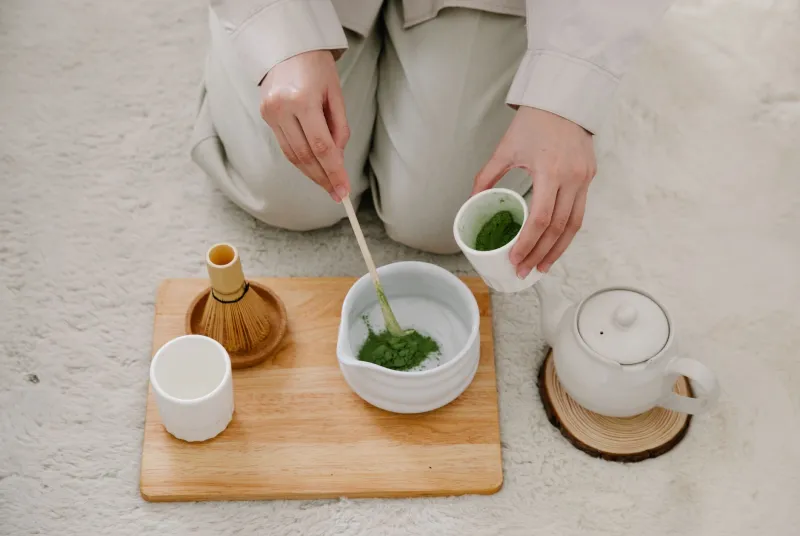
Photo: Shixart1985, CC BY 2.0, via Wikimedia Commons
There is a particular quality of attention that settles over a room when two people sit down together with no agenda other than the tea between them. The phone remains face-down. The conversation moves at the pace of the steeping. The second cup is poured with the same care as the first. This is not nostalgia. It is, for a growing number of affluent Americans, an active and deliberate practice—one they are investing in with the same intentionality they bring to any other significant dimension of their lives.
For years, the dominant narratives in luxury tea culture have trended toward the solitary and the ceremonial. The meditative solo practice. The formal gathering. The grand hotel tea service with its tiered stands and white-gloved attendants. These remain vital expressions of the form. But something quieter, and in many ways more radical, is gaining momentum: the reimagining of premium tea as the architecture of intimacy between two people.
The Cultural Moment That Created the Opening
The appetite for this kind of intentional togetherness did not emerge from nowhere. The past several years have produced a sustained cultural reckoning with the costs of constant digital connectivity—a reckoning that has been felt most acutely, perhaps, among couples and close companions who find themselves physically proximate but experientially distant. Sharing a physical space while occupying separate digital ones has become so normalized that its antidote requires deliberate design.
Tea, with its inherent insistence on presence—the water must be attended to, the timing observed, the vessel handled with care—offers a natural counterstructure to the fragmented attention economy. It asks something of both participants. That ask, it turns out, is precisely what many people are seeking.
"What we are seeing is a genuine desire to create rituals that belong to a relationship rather than to an individual," observed one product designer who has spent the past three years developing what she describes as "paired ritual objects" for the premium tea market. "People want something that is ours—a practice, a set of objects, a specific tea—that exists only in the context of this particular relationship. That is a very different brief than designing for a solo meditative practice."
What the Products Are Becoming
The design response to this shift has been, in the most interesting cases, genuinely innovative. Several independent ceramicists and small-batch vessel makers working in the premium segment have introduced what might be called companion-service pieces—teapots, gaiwans, and sharing vessels explicitly proportioned and aesthetically composed for two participants rather than the conventional single drinker or formal party.
Dual-chambered brewing vessels, which allow two different teas to steep simultaneously in a single shared form before being combined or served separately, have moved from artisanal novelty to sought-after design objects. A Brooklyn-based studio producing these pieces in small runs of fifteen to twenty units has maintained a waitlist of several months for the past year, with buyers drawn primarily from New York, Los Angeles, San Francisco, and Chicago.
The cup pairing—a matched set of two drinking vessels designed to be used exclusively together, often with subtle complementary asymmetries that make them visually incomplete in isolation—has become a distinct product category. Several Japanese makers whose work reaches the American market through specialty importers have produced cup pairs in this spirit for generations, but American consumers are discovering them with fresh eyes and a specific appetite that the makers themselves find gratifying.
Beyond vessels, the ritual toolkit for intimate tea service is expanding. Shared tea trays designed for a face-to-face configuration rather than the traditional host-facing layout. Timer objects calibrated for two-person brewing protocols. Curated two-person tea archives—a selection of twelve to twenty exceptional teas chosen specifically to be explored together over months or seasons—have emerged as a new category of luxury gift.
The Teas That Are Chosen for These Moments
The teas that collectors and enthusiasts are gravitating toward for intimate rituals tend to share certain characteristics. They reward close attention. They reveal themselves slowly, across multiple infusions, in ways that sustain conversation and contemplation simultaneously. They are, in most cases, teas with a story—an estate, a harvest season, a specific processing decision—that gives two people something to discuss, something to return to.
Gaoshan oolongs from Taiwan's high mountain regions, with their layered floral and mineral complexity, are frequently cited by practitioners of paired tea ritual as ideal candidates. The progression from a first infusion's bright volatility to a later infusion's deeper, roasted undertones provides a kind of shared narrative arc that unfolds over thirty or forty minutes—an ideal duration for the kind of unhurried conversation that intimacy requires.
Aged white teas, particularly those from Fujian's Fuding region with several years of careful storage, offer a different but equally compelling experience: a softness and depth that rewards silence as much as speech, and a sweetness that seems to shift subtly with each pour. Several high-end American retailers have begun offering curated paired-ritual selections built around these teas, complete with tasting notes framed specifically for the two-person experience.
Building a Proprietary Ritual
What distinguishes the most committed practitioners of paired tea ritual from casual enthusiasts is the development of what might be called proprietary tradition—a specific set of teas, objects, and protocols that belong to a particular relationship and are not replicated elsewhere. This is, in essence, the creation of a private culture.
Some couples have developed seasonal rituals tied to specific teas: a particular first-flush Darjeeling opened each spring, a roasted Taiwanese oolong reserved for the first cold evening of autumn. Others have established weekly tea sessions as inviolable calendar commitments—a protected hour that exists outside the ordinary scheduling pressures of professional life.
The investment required to establish such a ritual is not trivial. Exceptional teas, properly sourced and stored, represent a meaningful expenditure. Quality service ware from skilled makers commands prices commensurate with the artistry involved. But the practitioners who have made this investment consistently describe it in terms that suggest they regard it as among the more considered uses of their discretionary resources—not because it is expensive, but because of what it reliably produces.
Presence as the Ultimate Luxury
In a culture that has commodified virtually every form of experience, genuine undivided attention has become genuinely rare. The shared tea ritual, at its best, is a technology for producing exactly that—a structure that makes presence not merely possible but nearly inevitable.
Luxury brands that understand this are not simply selling tea. They are offering the conditions for a particular quality of human experience: unhurried, attentive, and specific to two people who have chosen, in a world of infinite distraction, to be entirely here. That is, by any measure, an extraordinary proposition.