The Quiet Cup: Inside the Luxury Wellness Retreats Reimagining Tea as a Science of Stillness

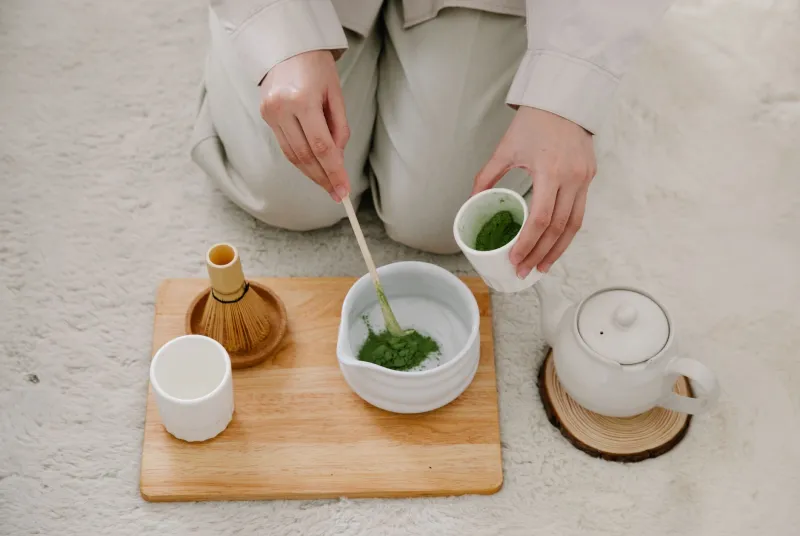
Photo by Photo by Scott Greer on Unsplash on Unsplash
The language of wellness has grown crowded. Biohacking, cold immersion, breathwork, neurological optimization — the vocabulary expands almost faster than the market can absorb it, and for the affluent American consumer who has sampled the full range of premium restorative experiences, a certain fatigue has set in. It is perhaps for this reason that something as ancient and unhurried as tea has emerged, in the most unexpected quarters, as the defining wellness proposition of the current moment. Not tea in any casual sense — not the bag dropped into a paper cup — but tea as a precisely designed, neuroscientifically informed, sensorially immersive encounter with the present moment.
At a small number of elite retreat centers and private wellness clubs, programs built around premium tea are attracting guests who arrive skeptical and depart transformed. The experiences they describe share a common quality: not the dramatic catharsis of an intense physical practice, but something quieter and, in many accounts, more durable.
The Architecture of a Tea Ritual
To understand why premium tea has captured the attention of luxury wellness designers, it is useful to consider what a properly conducted tea session actually involves at the physiological level. The preparation of a high-quality loose-leaf tea — measuring, heating water to a specific temperature, timing the infusion, attending to the color change in the liquor — requires a quality of sustained, gentle attention that is increasingly rare in contemporary American life. Neuroscientists describe this state as focused present-moment awareness, a cognitive mode associated with reduced cortisol levels, improved working memory, and a measurable decrease in the neural markers associated with ruminative thought.
The tea itself contributes biochemically. L-theanine, an amino acid found in abundance in shade-grown teas such as Japanese gyokuro and certain Chinese maocha, promotes alpha brain wave activity — the same neurological signature associated with relaxed alertness and creative flow. When combined with the moderate caffeine naturally present in quality tea, L-theanine produces what researchers describe as a state of calm focus: energized without agitation, clear without hyperarousal. It is a profile that pharmaceutical designers have attempted to replicate synthetically, with considerably less elegance.
Retreat Programs Setting the Standard
Several American wellness destinations have moved well beyond simply offering tea as a beverage amenity and have instead constructed comprehensive immersive programs around the leaf.
At a private mountain retreat in the Colorado Rockies — accessible by invitation through a members' network — guests participate in what the program directors describe as a tea immersion residency. Over three days, participants engage in guided morning sessions with a resident tea master who specializes in Taiwanese high-mountain oolongs. Each session is structured around a single tea, explored through multiple infusions, with deliberate attention given to how the flavor evolves across steepings — a practice that, by design, teaches the participant to observe change with curiosity rather than resistance. Evening sessions introduce aged pu-erh, whose deep, complex earthiness is paired with guided breathwork and low-light environments designed to facilitate parasympathetic nervous system activation.
In Northern California's wine country, a renowned wellness property has partnered with a Japanese chado (Way of Tea) practitioner to develop a program that draws on traditional Zen tea ceremony while incorporating contemporary sensory design principles. The room in which sessions are conducted has been acoustically engineered to eliminate ambient noise below a certain frequency threshold. Natural light is modulated through hand-woven rice paper screens. The tea — a ceremonial-grade matcha sourced directly from a single farm in Uji — is prepared in silence, consumed in silence, and followed by a twenty-minute period of unguided stillness that participants consistently identify as the most restorative portion of their visit.
"We are not selling relaxation," explains the program's lead facilitator. "We are offering the conditions under which a person can remember what it feels like to be genuinely present. The tea is the vehicle, but the destination is the guest's own attention."
Sensory Design as a Wellness Instrument
What distinguishes these elite programs from the broader wellness market is the degree of intentionality applied to every sensory variable surrounding the tea experience. Temperature, humidity, ambient scent, the weight and texture of the brewing vessel, the visual composition of the preparation space — each element is treated not as aesthetic decoration but as a functional component of the overall physiological effect.
This approach draws from emerging research in environmental psychology and sensory neuroscience. Studies conducted at institutions including Harvard's T.H. Chan School of Public Health and the University of California San Diego have demonstrated that carefully controlled sensory environments can significantly amplify the restorative effects of contemplative practices. Applied to tea, this means that the experience of drinking a fine gyokuro in a thoughtfully designed space produces measurably different outcomes than drinking the same tea in a distracting or visually cluttered environment.
Several retreat programs have engaged sensory designers — professionals who work across hospitality, healthcare, and performance architecture — to develop what they call tea environments: spaces purpose-built to maximize the neurological benefits of the tea ritual. Natural materials predominate: unfinished wood, river stone, hand-thrown ceramic. Artificial lighting, where used, is tuned to warm spectra that support melatonin regulation. The overall effect is an environment that seems to slow time without any explicit instruction to do so.
The Guest Who Arrives Skeptical
It is worth noting that the demographic drawn to these programs does not, as a rule, arrive predisposed to belief. The guests who have found their way to premium tea wellness programs tend to be accomplished professionals — executives, physicians, entrepreneurs, legal practitioners — who have engaged with the broader wellness market with the same rigorous skepticism they apply to business decisions. Many arrive having tried and found insufficient the more theatrical offerings of the luxury spa world: the four-handed massage, the cryotherapy chamber, the infrared sauna.
What they encounter in a well-designed tea program is something that meets their analytical expectations while simultaneously bypassing them. The biochemistry is real, the neuroscience is documented, the sensory design is intentional. And yet the experience itself resists reduction to mechanism. A cup of aged pu-erh, prepared with care and consumed in genuine silence, produces an effect that participants consistently struggle to articulate — not because it is mystical, but because it is deeply, specifically personal.
An Ancient Answer to a Modern Condition
The luxury wellness industry has, for decades, been in the business of solving a problem that prosperity itself creates: the difficulty of being present within a life of constant stimulation and demand. The solutions it has proposed have grown progressively more elaborate and, in some cases, more extreme. There is a certain elegance, then, in the observation that the most effective restorative tool available to the ultra-affluent consumer may be among the oldest and simplest in human history — a handful of dried leaves, water heated to the correct temperature, and the willingness to attend to what follows.