The Deliberate Cup: Why America's Wealthiest Are Abandoning Espresso for the Morning Tea Ritual
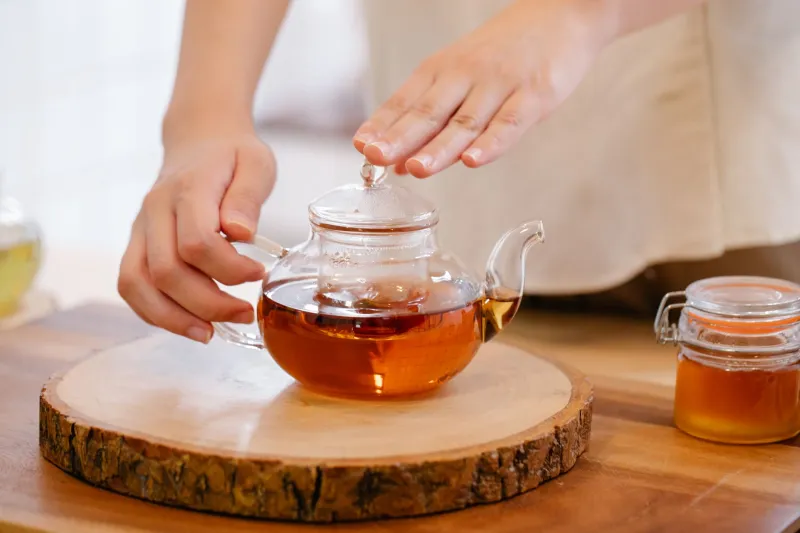
Across the penthouses and private estates of America's most affluent households, a quiet revolution is unfolding before sunrise. Premium loose-leaf tea has begun displacing the espresso machine as the morning centerpiece of choice among ultra-high-net-worth individuals — not merely as a beverage, but as a carefully constructed statement of intention, discipline, and refinement. What was once considered an understated preference has, in recent years, emerged as one of the more telling markers of a particular kind of wealth: the kind that no longer needs to announce itself.
The Psychology of the Deliberate Morning
For decades, the espresso ritual occupied a near-sacred position in the lexicon of high-achieving American culture. The hiss of a commercial-grade machine, the crema pooling in a hand-thrown ceramic demitasse — these were the signals of a person who moved fast and valued precision. But a subtle recalibration is underway among those at the very apex of American wealth, and luxury lifestyle consultants who advise such clients are taking careful note.
"There is a meaningful shift happening with clients whose net worth exceeds fifty million dollars," observes one New York-based lifestyle strategist who works exclusively with family offices and C-suite executives. "The espresso machine used to be a symbol of productivity. Now, for many of my clients, it has become associated with reactivity — with rushing. The tea ritual, by contrast, signals that you are someone who controls the pace of your own life."
This distinction — between reactivity and intention — lies at the psychological core of the shift. The preparation of a fine loose-leaf tea demands presence. A first-flush Darjeeling requires water held at precisely 185 degrees Fahrenheit. A rare Taiwanese high-mountain oolong rewards patience through multiple short steepings. These are not actions one performs on autopilot. They are, in the language of behavioral psychology, deliberate acts — and for individuals who spend their professional lives exercising control over vast resources and complex decisions, the deliberate morning ritual has become a form of self-governance.
Scarcity as Morning Currency
The parallels to fine wine collecting are not incidental. Just as the ultra-wealthy have long used rare vintages to signal cultural fluency and discernment, premium tea has entered a similar register of status signaling — one that operates below the threshold of ostentation.
Consider the growing number of collectors who now begin their mornings with aged pu-erh sourced from estates in Yunnan Province, or with white teas from single wild trees in Fujian that yield fewer than two kilograms of finished leaf per harvest. These are not beverages one encounters at a hotel breakfast or a business lunch. Their rarity is, in itself, a form of currency — one that communicates membership in a community of knowledge that cannot simply be purchased without the cultivation of genuine taste.
"My clients are not interested in what can be acquired easily," notes a Beverly Hills-based luxury concierge who sources rare provisions for a private clientele. "When I present them with a tea that was harvested by a single family on a mountainside in Fujian, and that fewer than two hundred people in the United States have ever tasted, that conversation lands differently than recommending a new espresso blend. It speaks to a different kind of aspiration."
The Social Signal in the Steeping
There is, of course, a performative dimension to this shift — though it operates with considerably more subtlety than the conspicuous consumption of earlier eras. The morning tea ritual, when conducted in the presence of business partners, houseguests, or family members, communicates a particular set of values: patience, knowledge, aesthetic sensitivity, and a willingness to invest time in something that cannot be rushed.
In the private dining rooms of Manhattan and the morning rooms of Bel Air estates, the appearance of a gaiwan, a bamboo whisk, or a hand-forged tetsubin iron kettle has become a conversation piece of the highest order. It invites inquiry. It creates narrative. And for individuals who have spent decades constructing a personal brand around excellence and discernment, the story of a tea — its provenance, its harvest season, its journey from a remote hillside to a particular morning table — is precisely the kind of story worth telling.
Self-Discipline in a Porcelain Cup
Beyond social signaling, luxury wellness consultants point to a more private motivation: the tea ritual as a form of daily self-discipline that the wealthy increasingly view as foundational to their performance. The absence of coffee's sharp cortisol spike, replaced by the sustained and smooth alertness that L-theanine and moderate caffeine together provide, has attracted considerable attention among high-performance individuals advised by functional medicine physicians.
"I have had clients describe the switch from espresso to premium green or white tea as one of the most impactful adjustments they have made to their morning routine," says a functional medicine practitioner whose clientele includes several Fortune 500 executives. "The quality of their focus changes. The anxiety edge that many high-achievers simply accept as normal begins to soften. And because the ritual itself requires more time and attention than pressing a button on a machine, it also functions as a kind of morning meditation."
A New Morning Standard
What emerges from these conversations is a portrait of a demographic in the process of redefining what luxury looks like before the rest of the world has awakened. The million-dollar morning, it turns out, is not measured in the cost of a machine or the brand on a capsule. It is measured in the quality of attention brought to a single, carefully chosen leaf — and in the willingness to let the day begin on one's own terms, at one's own pace, in the company of something genuinely rare.
For those who have spent a lifetime acquiring the extraordinary, the morning cup has become the most personal acquisition of all.