From Soil to Sip: How American Terroir Is Defining the Next Frontier of Tea Connoisseurship

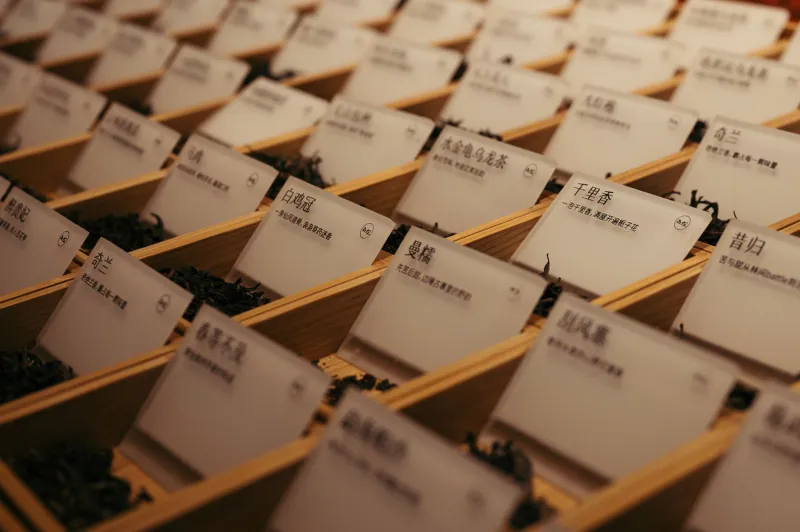
Photo by Photo by Gennady Zakharin on Unsplash on Unsplash
For generations, the word terroir belonged almost exclusively to the vocabulary of wine. It conjured images of Burgundian hillsides, Napa Valley fog, and the exacting relationship between a vine and its native earth. Today, that same word is being spoken with increasing reverence in a very different context — inside the tasting rooms of luxury hotels, aboard private members' clubs, and across the curated service programs of America's most celebrated resorts. Tea, it turns out, has its own terroir. And a new generation of specialists is making certain the world's most affluent consumers know it.
The Rise of the Tea Sommelier
The title itself is still earning its place at the table. Unlike the Master Sommelier credential, which carries decades of institutional weight, tea sommelier certification programs have only recently begun attracting serious professionals from the broader hospitality world. Organizations such as the Specialty Tea Institute and the American Tea Masters Association have worked to formalize training, but it is the marketplace itself — and the appetite of luxury consumers — that has truly accelerated the profession's prestige.
At properties like Blackberry Farm in Walland, Tennessee, and certain elite retreats in the Pacific Northwest, dedicated tea programs now rival their wine counterparts in depth and intentionality. Sommeliers at these establishments do not simply present a menu of options. They conduct tableside consultations, offer guided flights organized by elevation and oxidation level, and articulate tasting notes with the same precision one might expect from a Michelin-starred beverage director discussing a rare Burgundy.
"The guest who once asked for 'just a green tea' now wants to understand whether the leaf was harvested from a shaded garden at 3,000 feet or from a coastal plot where the morning mist lingers until midday," notes one senior beverage professional at a prominent Appalachian resort. "The curiosity is genuine — and it is growing."
America's Emerging Tea Regions
The geography of American tea cultivation remains modest compared to the ancient estates of Darjeeling or Fujian, yet what domestic growers lack in scale, they compensate for in singularity. Across a handful of distinct regions, a small but formidable community of estate operators is producing teas that are beginning to command the attention — and the premiums — once reserved exclusively for imported rarities.
The Appalachian Highlands represent perhaps the most storied domestic growing zone. The Cameron's Tea Farm in South Carolina's Upcountry, along with operations in North Carolina's Blue Ridge foothills, benefit from well-drained clay-loam soils, sharp diurnal temperature shifts, and a humid growing season that produces leaves of exceptional aromatic complexity. Teas from this corridor frequently present with a brisk minerality on the palate, followed by a lingering sweetness reminiscent of stone fruit — characteristics that sommeliers associate directly with the region's granite-rich substrata.
The Pacific Coast, stretching from Northern California through coastal Oregon, offers an entirely different profile. Marine air, acidic forest soils, and cooler growing temperatures yield teas of extraordinary delicacy. Oolong and white tea varietals from this corridor tend toward floral and oceanic notes — jasmine, sea salt, and green melon — that are virtually impossible to replicate in inland environments.
Hawaii's Big Island remains in a category of its own. Volcanic basalt soils, altitude variations within single estates, and the island's unique rainfall patterns have produced teas — most notably from the Mauna Kea slopes — that carry a savory depth and earthy sweetness comparable to some of the finest Taiwanese high-mountain oolongs.
Translating Terroir into Tasting Language
For the sommelier, the challenge is not merely identifying these regional signatures but communicating them in language that resonates with a sophisticated yet often tea-new clientele. The vocabulary of wine — body, finish, mouthfeel, terroir expression — translates with surprising elegance. Yet tea demands its own supplementary lexicon: hui gan (the returning sweetness experienced after swallowing), cha qi (the energetic sensation a leaf imparts), and the more tactile descriptors of astringency and viscosity that differentiate a high-elevation first flush from a late-harvest lowland leaf.
Leading sommeliers are increasingly developing proprietary tasting frameworks tailored to their clientele. Some employ aroma kits similar to those used in wine education, presenting guests with reference scents — dried apricot, wet slate, toasted rice, white peony — before introducing the tea itself. Others construct flights that move deliberately from the most delicate to the most complex expressions of a single estate, allowing the palate to build a comparative understanding in real time.
The Collector's Dimension
What distinguishes American terroir teas from their imported counterparts, at least in the current marketplace, is precisely their scarcity. Domestic estates operate on a fraction of the acreage found in China or India, and annual production figures for the finest lots are often measured in single-digit pounds. This constraint, while logistically limiting, creates a collector's market that serious buyers are only beginning to explore.
Sommeliers at several private clubs report that guests who complete a structured tasting program frequently inquire about acquiring personal allocations — purchasing directly from estates or through curated subscription arrangements. The parallel to allocated wine is not lost on anyone involved. A first-flush Appalachian white tea, produced in a run of fewer than twenty pounds and aged with proper humidity control, represents both a consumable luxury and a finite artifact of a specific season, a specific hillside, and a specific set of atmospheric conditions that will never precisely recur.
An Invitation to Discover
The broader significance of this movement extends beyond the tasting glass. As American tea culture matures, the sommelier serves as its most articulate ambassador — a professional trained not only to identify quality but to contextualize it within geography, history, and agricultural practice. For the affluent consumer accustomed to understanding their Champagne by house and their olive oil by harvest date, the invitation to engage with tea at the same level of granularity is not a burden. It is, by all accounts, a revelation.
The soil beneath a Tennessee hillside or an Oregon coastal bluff has been quietly accumulating character for millennia. It required only the right professional — and the right audience — to finally give it voice.