The Curated Cup: A Collector's Handbook for Assembling a High-Value Personal Tea Archive
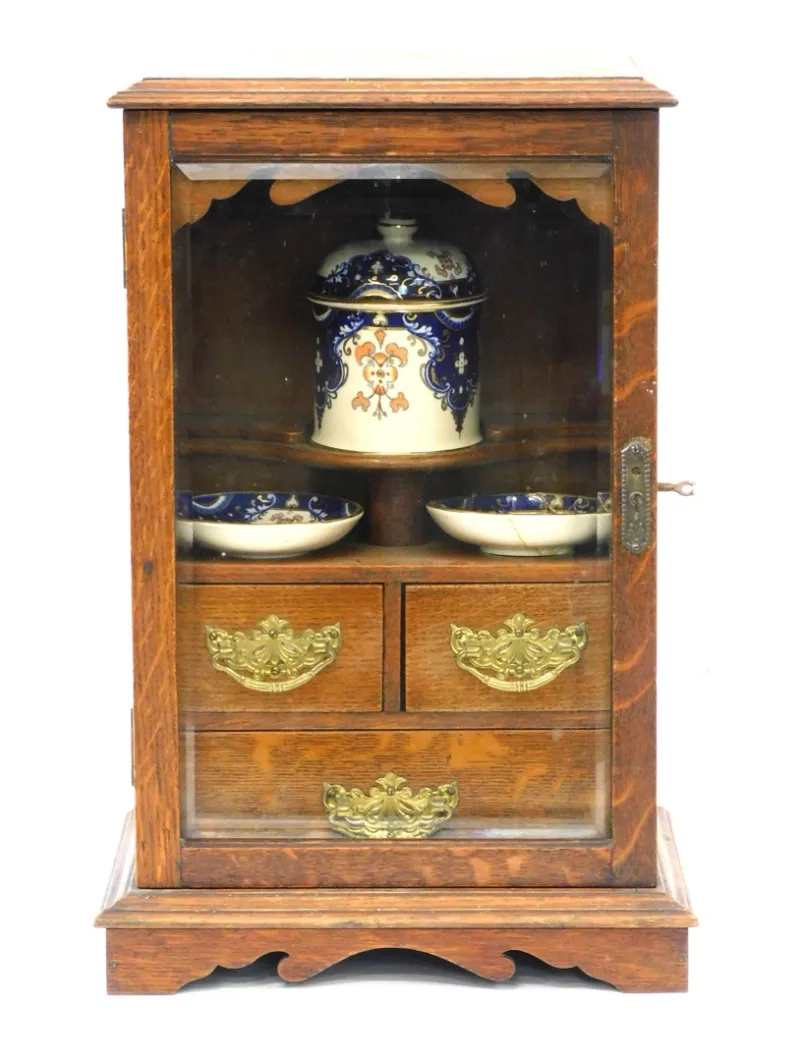
Photo: luxury tea collection wooden storage cabinet vintage tins elegant interior, via www.marionantiqueauctions.com
There is a meaningful distinction between a tea cabinet and a tea library. The former is a pantry convenience—stocked for daily habit, refreshed on impulse, consumed without ceremony. The latter is something altogether different: a deliberately assembled archive of leaves chosen for their rarity, provenance, aging potential, and historical significance. It is an expression of taste refined over years, and in certain instances, a tangible asset worth thousands of dollars.
The number of American collectors who take this longer view is growing. Driven by a deepening appreciation for single-origin teas, an expanding market for aged pu-erh, and the increasing scarcity of certain estate harvests, serious enthusiasts are approaching their collections with the same rigor they apply to art, wine, or rare books. The following framework is intended for those who are ready to make that transition—or who wish to ensure that a collection already begun is being built on sound principles.
1. Establish a Collecting Philosophy Before You Spend
The single most common mistake among nascent collectors is purchasing without a governing framework. Before acquiring anything of significant value, articulate the purpose and scope of your library. Are you focused on aged pu-erh as a long-term investment? Are you building a regional survey—one exceptional example from each of the world's great growing areas? Are you documenting the evolution of a single estate across multiple harvest years?
A defined philosophy prevents the collection from becoming an expensive accumulation of unrelated curiosities. It also makes the collection coherent to appraisers, potential buyers, and the collectors who may one day inherit it.
2. Understand the Tier Structure of Collectible Teas
Not all premium teas carry equal collectible weight. For practical purposes, the market organizes itself into three broad tiers.
Tier One — Investment-Grade Aged Pu-Erh: Raw (sheng) pu-erh cakes from reputable Yunnan producers, aged a minimum of ten years, represent the most established investment category in the tea world. Factory-pressed cakes from storied producers—Menghai Tea Factory, Xiaguan, and certain boutique producers operating in the Lao Ban Zhang and Ice Island regions—have appreciated substantially over the past two decades. Authenticated vintage cakes from the 1980s and 1990s now trade in the thousands of dollars per cake at specialized auction houses.
Tier Two — Rare Harvest Single-Origins: First-flush Darjeeling from named gardens (Castleton, Makaibari, Thurbo), high-mountain Taiwan oolongs from the Li Shan and Da Yu Ling elevations, and handpicked white teas from Fuding's Silver Needle gardens occupy this tier. These teas are consumed rather than indefinitely stored, but their scarcity and vintage specificity give them meaningful secondary market value in the short to medium term.
Tier Three — Emerging Domestic Estates: American estate teas—Charleston's limited single-flush releases, Oregon's small-batch green teas—are still establishing their collector market, but their documentary value and extreme scarcity position them as compelling speculative acquisitions for forward-thinking collectors.
3. Master the Fundamentals of Proper Storage
No collection retains its value without rigorous storage discipline. Tea is extraordinarily sensitive to its environment, and the enemies of a well-preserved leaf are consistent across categories: light, moisture, oxygen, foreign odors, and temperature fluctuation.
For aged pu-erh, the conventional wisdom favors a cool, dark environment with moderate humidity—roughly 60 to 70 percent relative humidity and a stable temperature between 60 and 75 degrees Fahrenheit. Some serious collectors in humid Southern states allow their cakes to age in naturally humid storage, a practice known as "wet storage" or shi cang, which accelerates fermentation and produces a distinct earthy character. Others prefer the slower, cleaner evolution of dry storage. Both are legitimate approaches, but they produce different results and should be chosen intentionally.
For delicate white teas and high-grade greens, airtight containers—ideally food-grade tins or vacuum-sealed vessels—kept in a temperature-stable environment away from direct light are essential. Refrigeration is appropriate for some green teas in the short term but is generally inadvisable for long-term storage due to condensation risk upon removal.
Dedicated tea storage furniture—purpose-built wooden cabinets lined with odor-neutral materials—is available from specialty importers and represents a worthwhile investment for collections of meaningful size.
4. Diversify Across Regions, Oxidation Levels, and Aging Trajectories
A well-constructed tea library, like a well-constructed investment portfolio, benefits from diversification. Concentrating exclusively in aged pu-erh exposes the collector to the volatility of a single market. A more resilient collection incorporates examples across the oxidation spectrum—white, green, oolong, black, and post-fermented—and across multiple geographic origins.
The practical benefit of this approach extends beyond financial prudence. A diversified library tells a more complete story of the tea world, which increases its interest to future buyers, estates, and institutions. Some private collections have been acquired in their entirety by hospitality groups and luxury hotel programs seeking to offer guests a curated tasting experience—an outcome far more likely when the collection represents genuine breadth.
5. Document, Authenticate, and Insure
The value of any rare item is only as secure as its documentation. For each significant acquisition, maintain a record that includes the purchase source, date, price paid, lot or harvest identifier, and any available provenance documentation. Photographs of the original packaging, seal, and wrapper (in the case of pu-erh cakes) should be archived digitally.
Authentication is a growing concern as the market for aged pu-erh matures and the financial stakes rise. Reputable specialist appraisers—several operate out of the San Francisco Bay Area and New York, cities with established Chinese tea communities—can evaluate cakes for signs of artificial aging, wrapper forgery, and inconsistency with claimed factory production periods.
Finally, any collection of meaningful financial value should be reflected in a homeowner's or renter's insurance policy, or covered by a standalone collectibles policy. The market value of aged pu-erh in particular has risen sharply enough that standard household coverage may be inadequate.
6. Engage the Community—Selectively
The most knowledgeable collectors rarely acquire in isolation. Specialist tea dealers, import houses with direct relationships to estate producers, and members-only collector communities all represent valuable networks for sourcing rare material, verifying authenticity, and staying informed about market movements.
In the United States, a small number of importers maintain allocation lists for annual estate releases—much as fine wine merchants manage allocation lists for Burgundy or Napa cult producers. Establishing relationships with these importers early, and demonstrating the seriousness of one's collecting intentions, is often the only path to acquiring the most limited offerings before they disappear from the market entirely.
A personal tea library built on these principles is not merely a pleasure—though it is certainly that. It is a considered, durable expression of connoisseurship that deepens with time, as the finest collections always do.